
The Truth About Salt
Why Indian diets contain far more sodium than we realize — and how to reduce it without losing taste.


Why Indian diets contain far more sodium than we realize — and how to reduce it without losing taste.
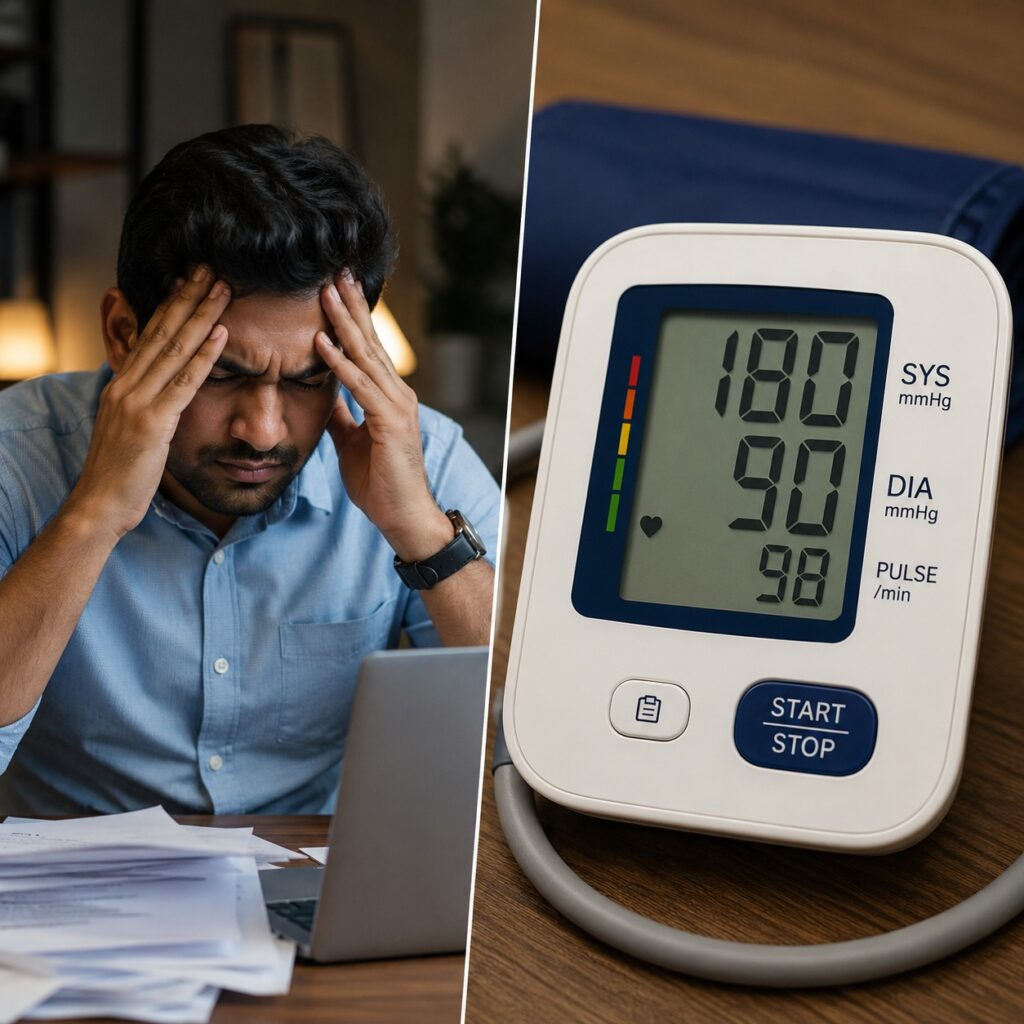
Stress isn’t just emotional — it’s hormonal. Learn how your body reacts in seconds, and how to regain control just as quickly.

A patient once told The Right Technique That Most People Get Wrong
me, slightly frustrated: “Doctor, I’ve checked my BP five times today. Every time it’s different. I think this machine is faulty.” When I asked him how he was measuring it, he said: Once immediately after climbing stairs, once while talking on the phone, once standing, once after Coffee and once lying down
The machine was not the problem. The method was. And this is something I see almost every day. People invest in a good blood pressure monitor — but no one really teaches them how to use it correctly. As a result, they end up with confusing readings, unnecessary anxiety, and sometimes even wrong treatment decisions.

A patient once showed me a week’s worth of blood pressure readings recorded carefully on his phone. They looked something like this:
118/78,
142/88,
126/82,
150/90,
122/80
He looked at me and asked, slightly frustrated: “Doctor, which one of these is my real blood pressure?” It is a fair question. And an important one. Because when blood pressure readings vary this much, most people assume something is wrong — either with their heart, or with the machine. But in many cases, what they are seeing is not a problem.It is normal physiology.

One of the most common questions patients ask in clinic sounds deceptively simple “Doctor, what is normal blood pressure?” Most people already expect the answer. Somewhere along the way they have heard the familiar number — 120 over 80. But after years of treating patients with hypertension, I have learned that the real answer is more nuanced than a single pair of numbers. Blood pressure is not a fixed label that permanently defines a person as “normal” or “abnormal.” It is a dynamic physiological signal, constantly adjusting to the needs of the body. And understanding this difference is the key to interpreting blood pressure correctly.