
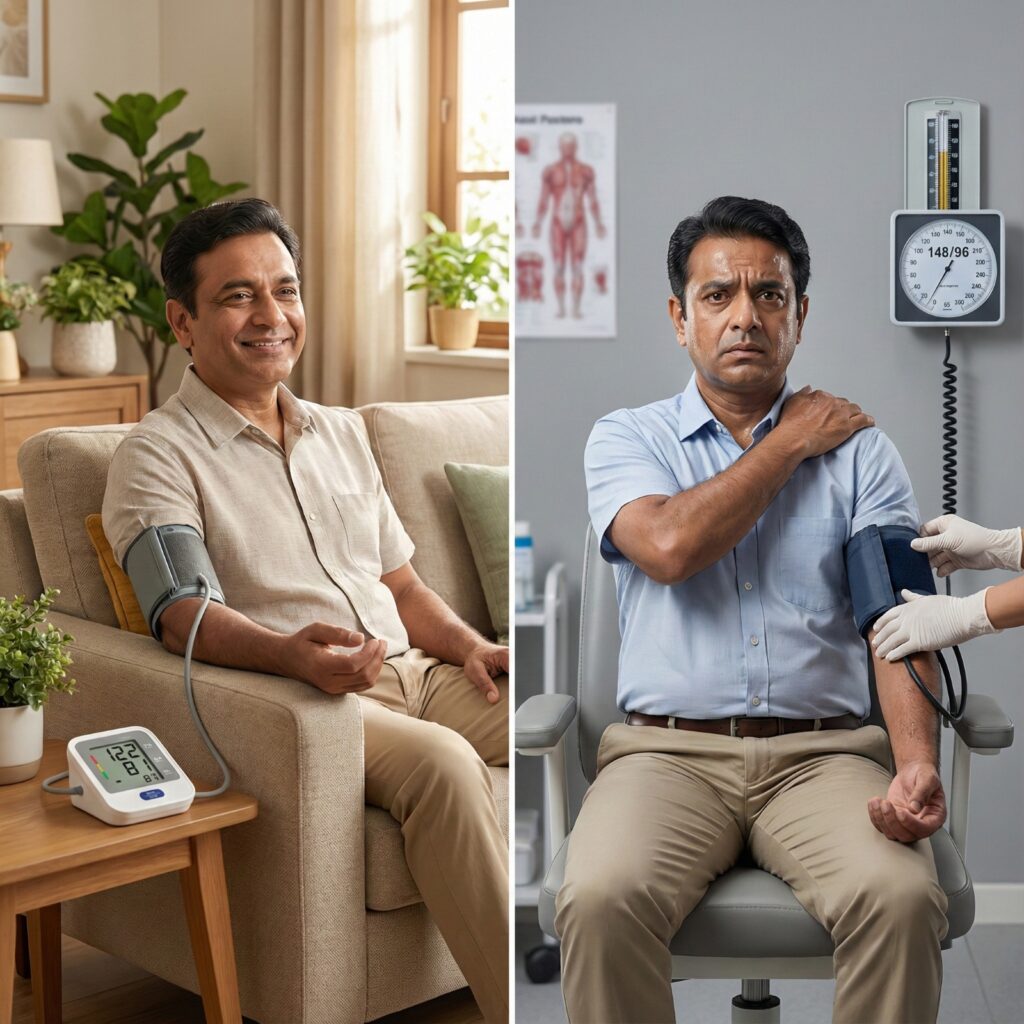
Modern digital BP monitors are generally reliable. But even the best device cannot compensate for poor technique. In fact, small errors in measurement can change readings by 10–20 mmHg or more — enough to label someone hypertensive when they are not, or falsely reassure someone who actually needs treatment. This is why correct measurement is not a minor detail. It is the foundation of accurate diagnosis.
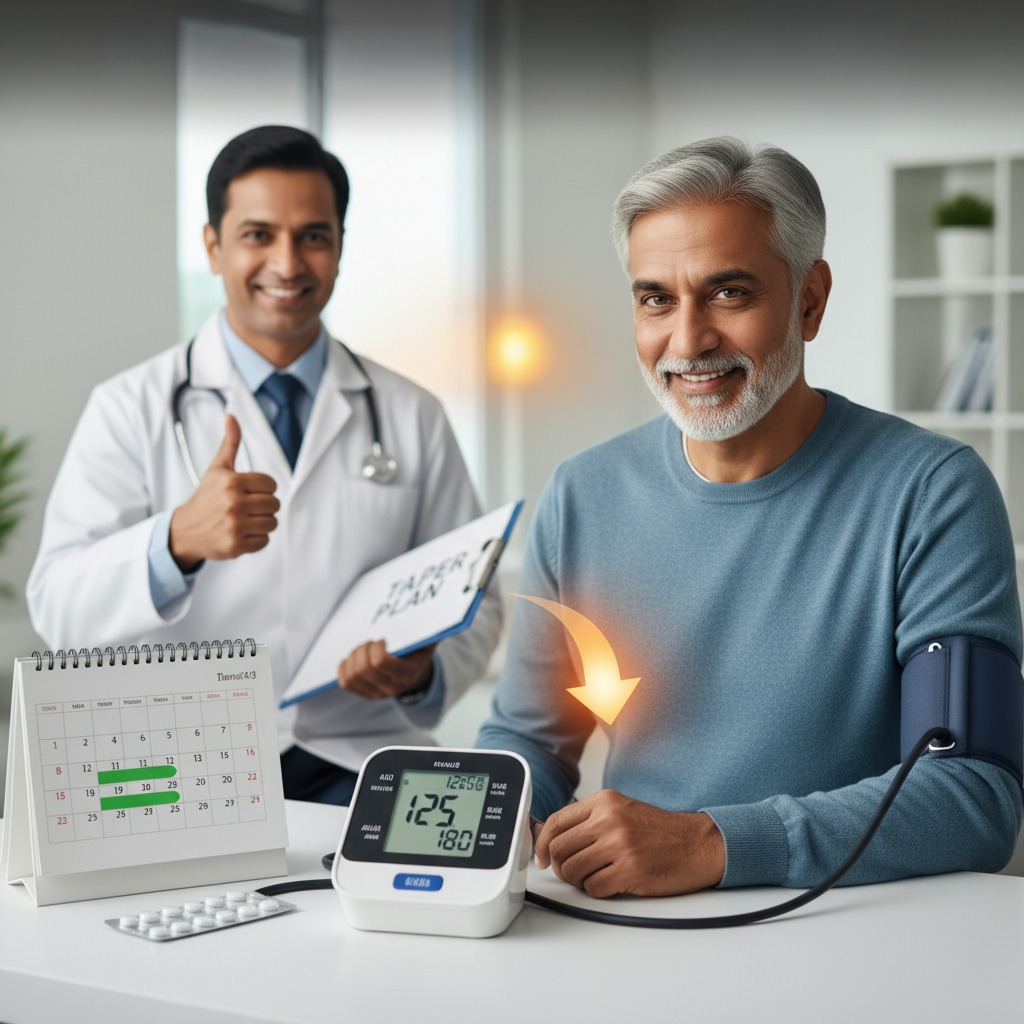
Blood pressure should not be measured randomly. The body needs a few minutes to settle into a resting state. Before measuring:
- Sit quietly for at least 5 minutes
- Avoid caffeine, smoking, or exercise for 30 minutes prior
- Empty your bladder if needed
- Sit in a calm environment without distractions
Even mild activity or conversation before measurement can raise blood pressure temporarily.
Posture plays a significant role in blood pressure readings. The correct position is simple, but often overlooked:
- Sit with your back supported
- Keep your feet flat on the ground (not crossed)
- Rest your arm on a table so that it is at heart level
- Keep your body relaxed and still
Unsupported sitting or dangling feet can increase readings.
Cuff placement is one of the most common sources of error.
- Wrap the cuff on the bare upper arm (not over clothing)
- Position it 1–2 cm above the elbow crease
- Ensure it is snug but not too tight
Using the wrong cuff size can significantly affect readings. A cuff that is too small can falsely elevate blood pressure.
This may sound simple — but it is often ignored.During measurement:
- Do not talk
- Do not move
- Do not look at your phone
Talking during measurement alone can increase systolic BP by 10–15 mmHg.
A single reading is rarely enough. Instead:
- Take 2 readings, 1–2 minutes apart
- If they differ significantly, take a third
- Record the average
This reduces random variation and gives a more reliable value.
Timing matters. For consistency:
- Measure BP in the morning (before medications, if applicable)
- Measure again in the evening
- Try to measure at the same times daily
Avoid measuring immediately after exercise, meals and stressful events
The purpose of home monitoring is not to react to every reading. It is to observe patterns over time. Instead of asking: “Why is this reading high?” Ask: “What is the trend over the past week?” This is how physicians interpret blood pressure.
Most errors in home BP monitoring are simple — but impactful.
- Measuring immediately after activity
- Checking BP repeatedly within minutes
- Using incorrect posture
- Talking during measurement
- Comparing readings taken under different conditions
- Obsessively focusing on single high readings
These mistakes can create confusion where none exists.
Home readings are valuable, but they should be interpreted thoughtfully. You should seek medical advice if:
- Your BP is consistently above 135/85 at home
- You notice large, unexplained fluctuations
- You have symptoms such as dizziness, headaches, or palpitations
- Your readings do not match how you feel
In some cases, your doctor may recommend 24-hour ambulatory BP monitoring (ABPM) to get a clearer picture.
Measuring blood pressure correctly is not about perfection. It is about consistency. If you measure it the same way, at the same time, under similar conditions — the readings begin to make sense. And once they make sense, they become useful.
A blood pressure monitor is not just a device. It is a tool. Used correctly, it can help you understand your body and prevent long-term disease. Used incorrectly, it can create unnecessary worry and confusion. The difference lies not in the machine — but in the method.
Dr. Ameya Amonkar
Interventional Cardiologist
Founder, HG Cardiowise