
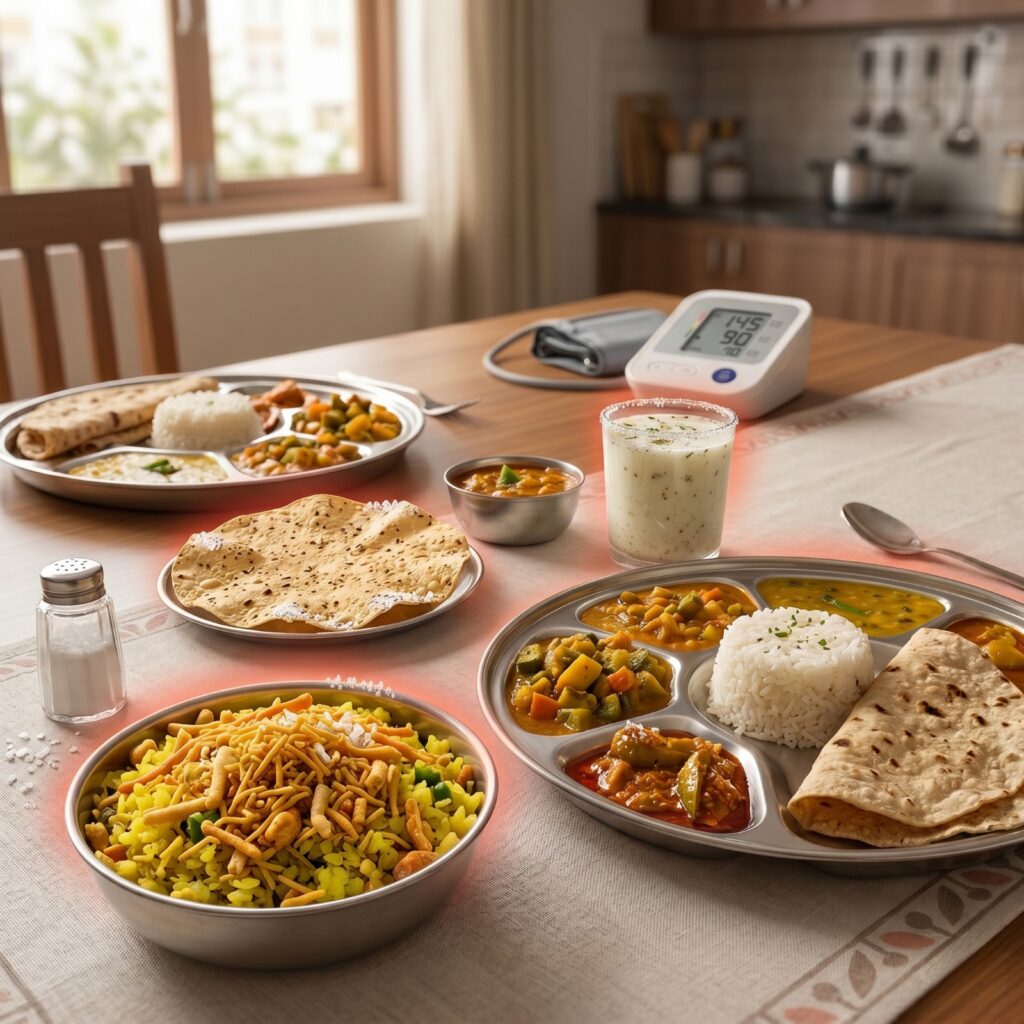
There is a moment that plays out in clinics across India almost every day. A patient with high blood pressure looks at me confidently and says: “Doctor, I don’t eat much salt.”Then the conversation begins. Morning poha with farsan. Pickle with lunch. Papad on the side. Salted chaas. Restaurant gravies twice a week. Packaged snacks during work. Extra chutney. A bowl of namkeen while watching television. And suddenly the picture changes.Because in India, the problem is rarely the salt we see. It is the salt quietly hiding in the foods we consider completely normal.
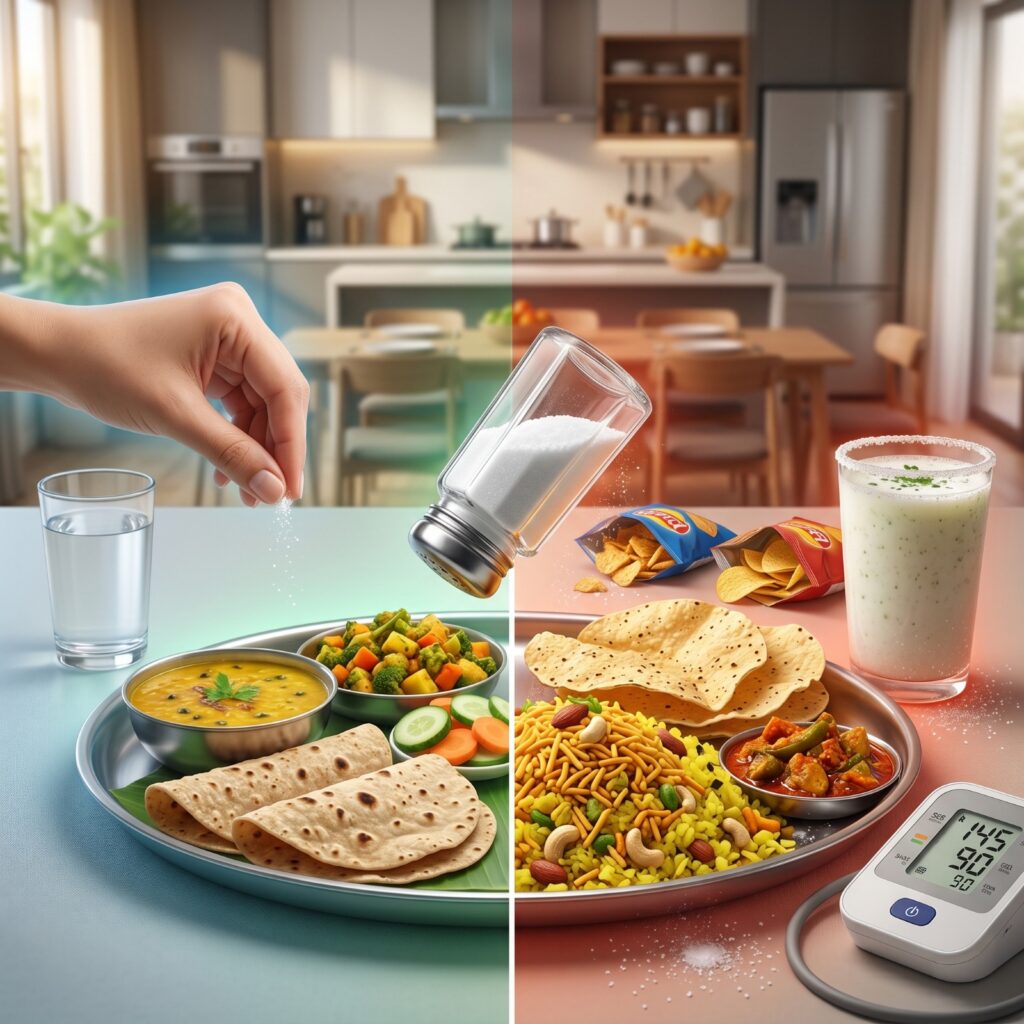
Salt is essential for life. The problem begins when an essential substance becomes excessive. Modern Indian diets — especially urban ones — contain far more sodium than most people realize. Many adults consume nearly double the recommended intake without ever picking up the salt shaker excessively. Most guidelines recommend less than 5 grams of salt daily (roughly one teaspoon in total). But many Indian diets easily cross:
9–12 grams a day and the excess often comes from foods that do not even taste particularly salty.
Excess sodium changes the way the body handles fluid, blood vessels, and hormonal regulation. Over time:
- the body retains more water
- blood volume increases
- arteries become stiffer
- pressure inside the blood vessels gradually rises
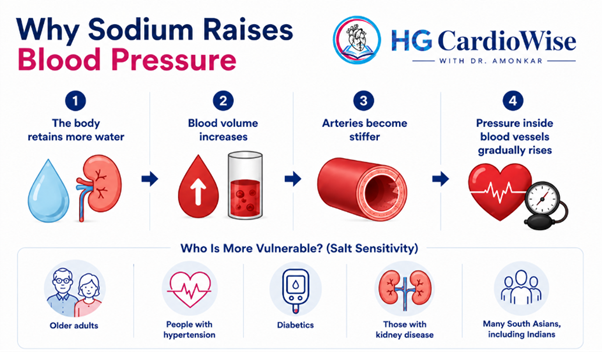
Some individuals are especially vulnerable — a phenomenon known as salt sensitivity. This includes older adults, people with hypertension, diabetics, those with kidney disease and many South Asians, including Indians.
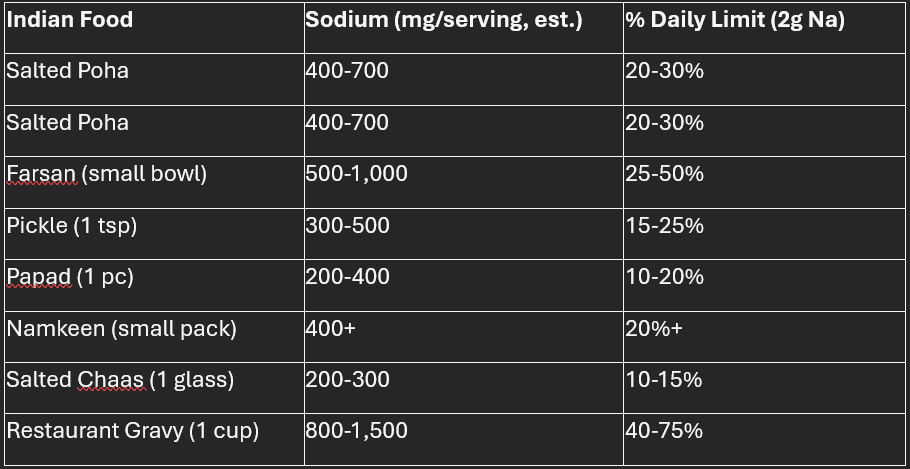
One of the biggest misconceptions about sodium is this: Avoiding the salt shaker is enough. It is not. Most sodium now comes from packaged foods, restaurant meals, processed snacks and convenience eating. And Indian diets contain many hidden sodium sources that rarely feel “salty.” A small bowl of farsan or namkeen may contain several hundred milligrams of sodium. Pickles and papads are sodium-dense despite their small portions. Bread, pav, biscuits, khari, soups, sauces, and restaurant gravies quietly add up through the day. Sometimes, a single restaurant meal can contain an entire day’s recommended sodium intake.
Salt is deeply connected to habit, culture, and reward pathways in the brain. When people suddenly reduce salt drastically, food often feels bland and unsatisfying. But the body adapts remarkably quickly. Within a few weeks taste buds become more sensitive, natural flavors feel stronger and previously normal foods may start tasting excessively salty. This adaptation is one of the most underestimated tools in preventive cardiology.
This is where many salt-reduction plans fail. Patients imagine boiled vegetables and joyless “diet food.” But reducing salt does not mean removing flavor. Some of the best cuisines in the world build taste through spices, herbs, texture, aroma and acidity, not just sodium. Lemon, kokum, tamarind, curd, ginger, garlic, jeera, curry leaves, pepper, and roasted masalas can dramatically improve flavor while reducing dependence on excess salt. And gradual reduction works far better than sudden restriction.
This question appears almost daily now. Himalayan pink salt, sendha namak, sea salt, black salt — all create an impression of being healthier But from a blood pressure perspective, most still contain substantial sodium. Some contain trace minerals, but not in amounts large enough to meaningfully offset excess sodium intake. The body responds primarily to total sodium load — not the color of the salt.
Instead of obsessing over eliminating salt completely, a more useful question is “Where is most of my sodium actually coming from?” For most people, it is not home-cooked dal or roti. It is packaged snacks, restaurant food, processed convenience eating and repeated small exposures through the day. And that is usually where the biggest improvements happen.
One of the quietest shifts in modern food culture is not just that we eat more. It is that we eat more engineered taste. And salt sits at the center of that engineering. Understanding sodium is not about fear. It is about awareness. Because once you begin noticing where salt hides, you start understanding your blood pressure differently.
🫀 HG Cardiowise Insight
👉 The goal is not a tasteless life.
👉 The goal is a heart that does not quietly suffer from excess.
Dr. Ameya Amonkar
Interventional Cardiologist
Founder, HG Cardiowise