QUICK SUMMARY
Cholesterol is essential for life, but when LDL (“bad cholesterol”) remains elevated over many years, it can damage the arteries that supply blood to your heart and brain. Cholesterol particles enter the artery wall, triggering inflammation and the gradual formation of fatty plaques—a process known as atherosclerosis. As these plaques grow, they narrow the arteries and reduce blood flow. The greatest danger occurs when an inflamed plaque ruptures, causing a blood clot that suddenly blocks an artery and leads to a heart attack or stroke. Importantly, high cholesterol itself does not cause symptoms; it quietly increases your long-term cardiovascular risk. Understanding how cholesterol, inflammation, genetics, and lifestyle work together empowers you to take early preventive action and protect your heart for years to come.
DETAILED LEARNING GUIDE
Cholesterol Is Essential—But Balance Matters
Cholesterol often gets blamed for heart disease, yet it performs several vital functions. Every cell in the body depends on cholesterol to maintain healthy cell membranes. It is also required to produce important hormones such as testosterone and oestrogen, manufacture vitamin D, and produce bile acids that help digest dietary fats.
Most people are surprised to learn that approximately 75–80% of the cholesterol in the body is produced naturally by the liver. The remainder comes from food. This means cholesterol itself is not the enemy; rather, problems develop when certain cholesterol particles become excessive or remain elevated for many years.
A healthy cardiovascular system depends on maintaining the right balance between different lipoproteins, including LDL, HDL, and triglycerides. Understanding these differences is the first step in preventing heart disease.
How Cholesterol Travels Through Your Bloodstream
Because cholesterol does not dissolve in blood, it must travel inside specialised transport particles called lipoproteins.
There are three major types:
LDL (Low-Density Lipoprotein): Delivers cholesterol from the liver to tissues throughout the body. While essential, excess LDL increases the likelihood of cholesterol entering artery walls.
HDL (High-Density Lipoprotein): Removes excess cholesterol from the bloodstream and carries it back to the liver for recycling or elimination through a process called reverse cholesterol transport.
Triglycerides: These are the body’s main storage form of fat. Persistently elevated triglycerides often occur alongside low HDL and increase cardiovascular risk.
These lipoproteins constantly circulate through the bloodstream. Problems arise when LDL particles outnumber the body’s ability to remove or process them efficiently.
How LDL Cholesterol Forms Plaque Inside Arteries
Healthy arteries are smooth, flexible, and allow blood to flow freely. Elevated LDL cholesterol changes this environment gradually.
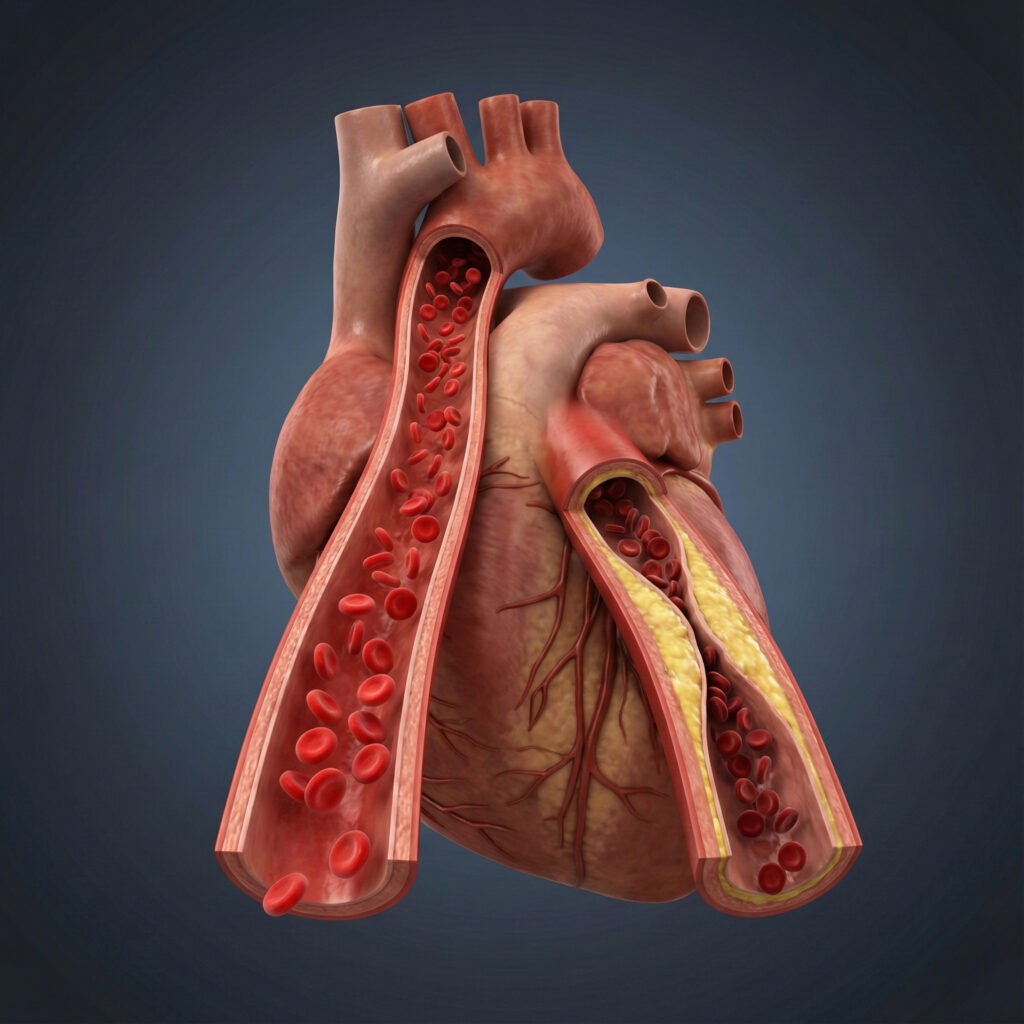
Over time, LDL particles penetrate the inner lining of arteries and become trapped beneath the surface. As cholesterol accumulates, the body mounts an inflammatory response. White blood cells migrate into the artery wall and begin engulfing cholesterol, forming fatty deposits called plaques.
Plaques are not made of cholesterol alone. They contain cholesterol, inflammatory cells, connective tissue, calcium, and cellular debris. Initially, plaques grow silently without causing symptoms.
As plaque enlarges, the artery gradually narrows and becomes less elastic, reducing blood flow to organs such as the heart and brain. If blood supply becomes inadequate during physical activity or emotional stress, symptoms such as chest discomfort or reduced exercise tolerance may develop.
This gradual process, known as atherosclerosis, often begins decades before the first clinical event occurs.
Inflammation: The Hidden Driver of Heart Attacks
Many people believe that narrowing alone causes heart attacks. In reality, inflammation is often the critical event that transforms stable plaque into a medical emergency.
Once trapped inside the artery wall, LDL particles undergo chemical changes known as oxidation. Oxidised LDL is recognised by the immune system as harmful, triggering persistent inflammation.
As inflammatory cells accumulate, they weaken the protective fibrous cap covering the plaque. Eventually, this cap may rupture unexpectedly.
When plaque ruptures, the body interprets it as an injury and rapidly forms a blood clot. If the clot completely blocks the artery, blood flow stops suddenly, resulting in a heart attack or stroke.
Research has demonstrated that lowering both LDL cholesterol and inflammation substantially reduces cardiovascular risk. This is one reason cholesterol-lowering medications such as statins provide benefits beyond cholesterol reduction alone.
High Cholesterol Is a Risk Factor—Not a Disease
One of the most common misconceptions is that high cholesterol directly causes symptoms.
In reality, high cholesterol does not produce chest pain, breathlessness, or fatigue by itself. Most people with elevated cholesterol feel completely healthy for many years.
The danger lies in its cumulative effect. Persistently high LDL cholesterol gradually accelerates plaque formation, particularly when combined with other cardiovascular risk factors such as:
* High blood pressure
* Diabetes
* Smoking or tobacco use
* Obesity
* Physical inactivity
* Chronic kidney disease
* Family history of premature heart disease
* Inherited conditions such as familial hypercholesterolaemia
Because cholesterol is silent, regular screening is essential. Identifying elevated cholesterol early provides an opportunity to reduce long-term cardiovascular risk before irreversible damage occurs.
Preventing Heart Disease Begins Long Before Symptoms
The encouraging news is that atherosclerosis is largely preventable and treatable.
Heart-healthy habits remain the foundation of prevention:
* Eat a balanced diet rich in vegetables, fruits, whole grains, legumes, nuts, and healthy fats.
* Reduce saturated fats, trans fats, and highly processed foods.
* Exercise regularly, aiming for at least 150 minutes of moderate physical activity each week.
* Maintain a healthy body weight.
* Avoid smoking and all forms of tobacco.
* Control diabetes, blood pressure, and other cardiovascular risk factors.
* Have your lipid profile checked regularly as advised by your healthcare provider.
For many individuals—particularly those with diabetes, previous heart disease, or very high LDL cholesterol—lifestyle changes alone may not be sufficient. Cholesterol-lowering medications can substantially reduce the risk of future heart attacks and strokes when used appropriately.
FREQUENTLY ASKED QUESTIONS
Does high cholesterol always lead to heart disease?
No. High cholesterol increases the risk of heart disease, but the actual risk depends on several factors, including age, blood pressure, diabetes, smoking, family history, and lifestyle.
How does LDL cholesterol damage arteries?
LDL particles can enter the artery wall, trigger inflammation, and contribute to plaque formation. Over time, these plaques narrow arteries and may rupture, causing heart attacks or strokes.
Why is inflammation important in heart disease?
Inflammation weakens cholesterol plaques, making them more likely to rupture. Most heart attacks occur when an inflamed plaque breaks open and a blood clot suddenly blocks the artery.
Can high cholesterol cause chest pain?
High cholesterol itself does not cause symptoms. Chest pain develops only when plaque significantly reduces blood flow to the heart or when a heart attack occurs.
Can cholesterol levels improve with lifestyle changes?
Yes. Healthy eating, regular exercise, weight management, avoiding tobacco, and controlling diabetes can significantly improve cholesterol levels and reduce cardiovascular risk.
Who should have their cholesterol tested?
All adults should undergo cholesterol screening based on age and cardiovascular risk. Earlier testing is recommended for people with diabetes, hypertension, obesity, tobacco use, or a family history of premature heart disease.
If I feel healthy, do I still need a cholesterol test?
Yes. High cholesterol is usually silent. Many people develop significant artery disease without experiencing any symptoms until a heart attack or stroke occurs.
MEDICAL DISCLAIMER
This educational content is intended for general information only and should not replace professional medical advice, diagnosis, or treatment. High cholesterol is a major cardiovascular risk factor but requires individual assessment based on your overall health profile. Never stop or change prescribed cholesterol-lowering medications without consulting your healthcare professional. If you experience chest pain, sudden weakness, difficulty speaking, severe breathlessness, or symptoms suggestive of a heart attack or stroke, seek emergency medical care immediately.