
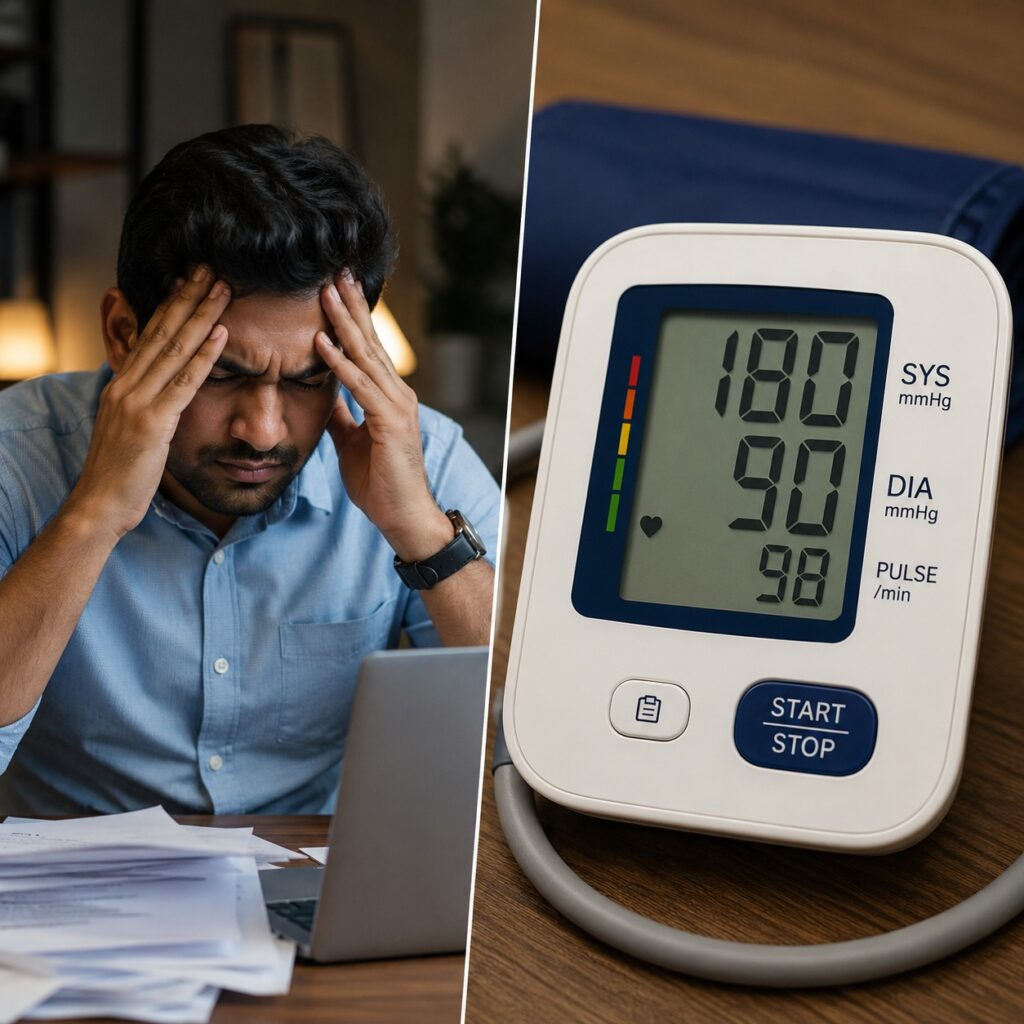
A 42-year-old executive walked into my clinic with a familiar concern. “Doctor, my BP is completely normal at home. But every time I’m stressed — meetings, deadlines, arguments — it shoots up.” His reports were pristine. No diabetes. No obesity. No structural heart disease.
Yet his blood pressure logs told a different story —spikes during stress, normal readings during calm. This is where most people get confused. They think stress is a feeling. In reality, stress is a biological event. And the moment it begins, your body behaves as if it is under attack.
When you experience stress — whether it’s a boardroom argument or a traffic jam — your brain activates a deeply wired survival system. Within seconds:
- The sympathetic nervous system switches on
- Adrenaline surges through your bloodstream
- Your heart starts beating faster
- Blood vessels tighten
- Blood pressure rises — sometimes sharply
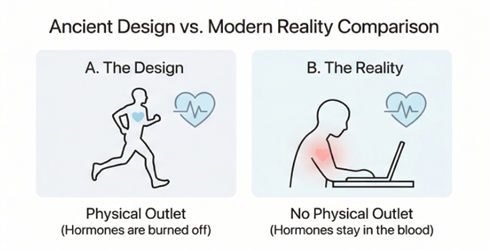
This is not accidental. This is design. Your body is preparing you to fight or flee. But here is the problem. Modern stress has no physical outlet. You don’t run. You don’t fight. You sit. And the surge stays.
Occasional spikes in BP during stress are normal. But repeated exposure changes the baseline. Over time blood vessels remain slightly constricted, heart rate stays elevated, hormonal systems become overactive and the body “learns” to stay in a high-alert state. This is how temporary spikes quietly become sustained hypertension. Not overnight. But steadily. And often unnoticed.
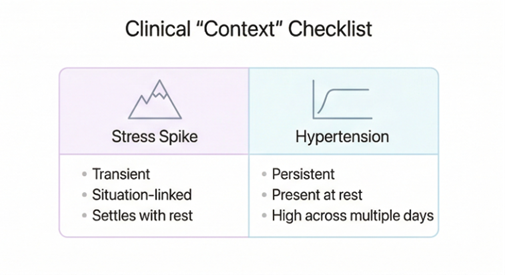
This is one of the most common clinical scenarios I see. A patient records a few high readings during stressful periods and panics. Or worse — is started on medication immediately. But context matters. A stress-induced BP spike is transient, situation–dependent and often reversible with calming. Whereas true hypertension is persistent, present even during rest and seen across multiple readings. The distinction is critical. Because treating numbers without understanding context leads to overtreatment — or undertreatment.
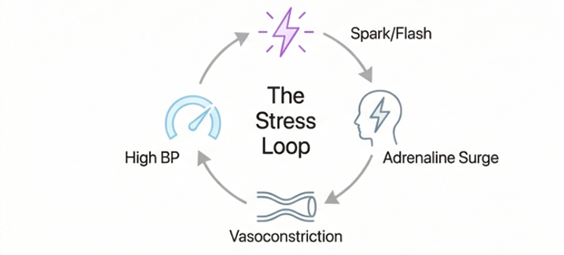
Stress doesn’t just raise BP once. It creates a loop.
- You feel stressed → BP rises
- You notice the BP → anxiety increases
- Anxiety further raises BP
- You check again → even higher
This is not uncommon. In fact, some patients develop a form of measurement anxiety, where the act of checking BP itself raises the reading. This is why: Blood pressure is not just a cardiovascular parameter. It is a psychological–physiological interface.
This is perhaps the most important concept. Your body reacts the same way to areal physical danger, a work deadline, a difficult conversation, financial stress or health anxiety. To your physiology, all of these are “threats.” And the response is identical: Raise heart rate, Raise BP and Prepare for action. Which means: Even “mental stress” has real cardiovascular consequences.
Chronic stress affects far more than just BP. It contributes to persistent hypertension, insulin resistance, increased abdominal fat, poor sleep quality and elevated inflammatory markers. Over time, this becomes a risk amplifier for heart disease. Not because stress alone causes heart attacks, but because it quietly worsens every underlying risk factor.
This is where most people underestimate the body. Just as stress can raise BP quickly —calm can lower it just as fast. Here are practical, clinically effective methods I recommend:
1. Controlled Breathing (The Fastest Reset)
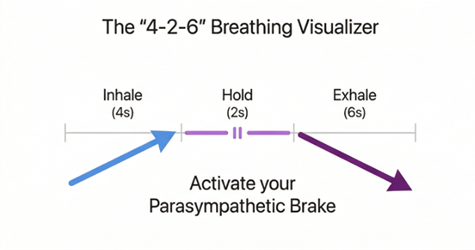
Slow, deep breathing activates the parasympathetic system — your body’s natural brake.
Simple method:
- Inhale for 4 seconds
- Hold for 2 seconds
- Exhale slowly for 6 seconds
- Repeat for 3–5 minutes
This alone can reduce BP by 5–10 mmHg in some individuals.
2. The 5–Minute Pause Before Measuring BP
Many “high readings” are simply due to poor timing. Always sit quietly for 5 minutes, avoid talking and avoid checking immediately after activity or stress. You will be surprised how often the number settles.
3. Post-Stress Movement
After a stressful episode, take a short walk, stretch and move your body. This helps burn off the stress hormones that are still circulating.
4. Reduce Stimulants in High-Stress Phases
During stressful days; limit caffeine, avoid excess nicotine and stay hydrated. These small changes prevent amplification of BP spikes.
5. Improve Sleep — The Most Underrated Tool
Poor sleep increases stress hormones the next day. Chronic sleep deprivation raises baseline BP and reduces stress tolerance. In many patients, improving sleep alone stabilizes BP significantly.
Not every stress-related spike is harmless. You should seek evaluation if:
- BP remains high even at rest
- Readings are consistently elevated across days
- You have other risk factors (diabetes, obesity, family history)
- You experience symptoms like chest discomfort, breathlessness, or severe headache
Because sometimes, stress unmasks underlying hypertension.
The biggest mistake people make is reacting to a single number. But blood pressure is not a snapshot. It is a story over time. And stress is one of the most powerful authors of that story. Starting today, Track BP — but don’t obsess over single readings, learn simple calming techniques, respect sleep and recovery and try to understand your patterns
In cardiology, we often focus on arteries, cholesterol, and numbers. But sometimes, the most powerful force affecting the heart is something far less visible. The state of the mind.
Dr. Ameya Amonkar
Interventional Cardiologist
Founder, HG Cardiowise