⁠Understanding Cholesterol — A Sholay Story

Dr. Ameya Amonkar
Blood TestsSalt

Key Takeaways

Cholesterol is essential for life, but excess LDL cholesterol increases the risk of heart disease.

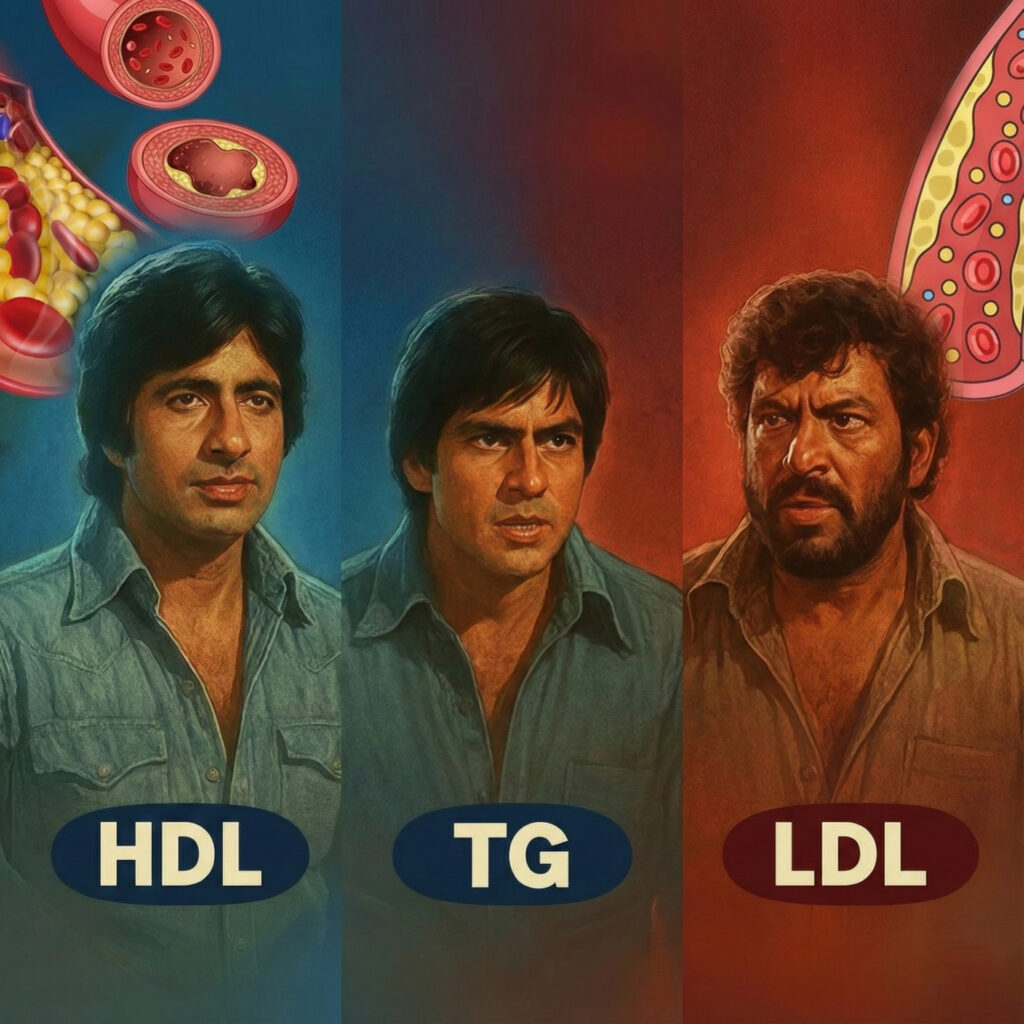
HDL cholesterol helps remove excess cholesterol from the bloodstream and transports it back to the liver.

High triglycerides often result from excess calories, obesity, diabetes, or physical inactivity.

Lipoprotein(a), or Lp(a), is largely inherited and can significantly increase cardiovascular risk.
A healthy diet, regular exercise, maintaining a healthy weight, and avoiding tobacco improve cholesterol levels.
QUICK SUMMARY
Cholesterol is often misunderstood. While many people think it is entirely harmful, your body actually needs cholesterol to build cells, produce hormones, and support many essential functions. The real issue is maintaining the right balance between different types of blood lipids. HDL (“good cholesterol”) helps remove excess cholesterol from the bloodstream, while LDL (“bad cholesterol”) can accumulate inside artery walls and increase the risk of heart attack and stroke. Triglycerides are the body’s main form of stored fat and become harmful when levels remain elevated. Lipoprotein(a), or Lp(a), is an inherited form of cholesterol that can further increase cardiovascular risk. Understanding these different lipids—and adopting healthy lifestyle habits along with appropriate medical treatment when needed—is one of the most effective ways to protect long-term heart health.

DETAILED LEARNING GUIDE

Cholesterol: An Essential Molecule, Not the Enemy
Cholesterol often receives a bad reputation, but it is actually vital for normal body function. Every cell in the body requires cholesterol to build healthy cell membranes. It is also used to produce important hormones, vitamin D, and bile acids that help digest fats.

Because cholesterol and fats do not dissolve in blood, they need specialised transport vehicles called lipoproteins. These particles carry cholesterol and triglycerides through the bloodstream to different organs and tissues.

Problems develop not because cholesterol exists, but because the balance between different lipoproteins becomes unhealthy. Excess LDL cholesterol, elevated triglycerides, and certain inherited lipid disorders increase the likelihood of cholesterol being deposited inside artery walls. Understanding the different types of blood lipids helps explain why some cholesterol protects the heart while other forms increase cardiovascular risk.

How Dietary Fat Travels Through the Body
After a meal containing fats, the digestive system breaks triglycerides into fatty acids and glycerol. These smaller components are absorbed through the intestine and packaged into particles called chylomicrons, which transport dietary fat through the bloodstream.

The body uses these fatty acids immediately for energy or stores them inside fat tissue for future needs. The liver also plays a central role by processing fats and producing various lipoproteins that distribute cholesterol throughout the body.

This system is highly efficient and essential for survival. Problems arise when excess calories, unhealthy eating habits, inactivity, or genetic factors overwhelm the body’s ability to maintain a healthy lipid balance. Over time, unhealthy lipid levels contribute to the gradual development of atherosclerosis—the buildup of fatty plaques inside arteries.

LDL Cholesterol: Why “Bad Cholesterol” Matters
Low-density lipoprotein (LDL) carries cholesterol from the liver to tissues that require it. Although this is a normal biological function, excessive LDL cholesterol becomes harmful.

When LDL levels remain elevated, cholesterol can penetrate the inner lining of arteries. The body’s immune system responds to these deposits, triggering inflammation and plaque formation. As plaques enlarge, arteries gradually narrow and lose flexibility.

Eventually, plaques may rupture, leading to blood clot formation that blocks blood flow completely. This process is responsible for most heart attacks and many strokes.

Lowering LDL cholesterol is therefore one of the most effective strategies for preventing cardiovascular disease. Numerous clinical studies have shown that reducing LDL significantly lowers the risk of future heart attacks, stroke, and cardiovascular death.

HDL Cholesterol: The Heart’s Cleanup System
High-density lipoprotein (HDL) is often called “good cholesterol” because it performs the important task of removing excess cholesterol from the bloodstream and artery walls.

HDL transports surplus cholesterol back to the liver, where it can be recycled or eliminated from the body. This process, known as reverse cholesterol transport, helps reduce cholesterol accumulation inside arteries.

Although higher HDL levels are generally associated with lower cardiovascular risk, modern research shows that simply increasing HDL numbers does not always reduce heart disease risk. What matters most is maintaining an overall healthy lifestyle that improves HDL function while lowering LDL cholesterol and triglycerides.

Regular physical activity, weight management, avoiding tobacco, and consuming healthy fats can all support healthier HDL levels.

Triglycerides and Lipoprotein(a): The Often Overlooked Risks
Triglycerides are the body’s primary storage form of fat and provide an important source of energy. However, high triglyceride levels often reflect excess calorie intake, obesity, poorly controlled diabetes, excessive alcohol intake, or physical inactivity.

Elevated triglycerides commonly occur alongside low HDL cholesterol and increase overall cardiovascular risk.

Another important lipid is Lipoprotein(a) or Lp(a). This inherited form of LDL cholesterol contains an additional protein that makes it particularly prone to promoting plaque formation and blood clotting.

Unlike LDL, Lp(a) levels are determined mainly by genetics rather than lifestyle. Individuals with a strong family history of premature heart disease, stroke, or elevated cholesterol should discuss Lp(a) testing with their healthcare provider, as identifying elevated levels can improve long-term cardiovascular risk assessment.

The Liver: The Control Centre of Cholesterol Metabolism
The liver serves as the body’s cholesterol management headquarters. It manufactures cholesterol, processes dietary fats, removes excess cholesterol from circulation, produces lipoproteins, and regulates triglyceride metabolism.

When the body needs energy, the liver releases stored fatty acids into the bloodstream. When energy intake exceeds demand, excess fat is stored for future use.

The liver also removes cholesterol returned by HDL and helps regulate LDL levels through specialised LDL receptors. In many individuals with inherited high cholesterol, these receptors function poorly, resulting in persistently elevated LDL levels despite healthy lifestyle habits.

This explains why some people require cholesterol-lowering medications in addition to diet and exercise.

Protecting Your Heart: Lifestyle Still Matters
Most people can significantly improve their cholesterol profile through healthy daily habits.

These include:
* Eating more vegetables, fruits, whole grains, legumes, nuts, and healthy oils.
* Choosing lean sources of protein and limiting processed foods.
* Reducing saturated fat and eliminating trans fats whenever possible.
* Exercising for at least 150 minutes each week.
* Maintaining a healthy body weight.
* Avoiding smoking and tobacco products.
* Controlling diabetes and blood pressure.

For individuals at higher cardiovascular risk, lifestyle measures may need to be combined with cholesterol-lowering medications such as statins or other lipid-lowering therapies. Treatment decisions should always be individualised based on overall cardiovascular risk rather than cholesterol numbers alone.

FREQUENTLY ASKED QUESTIONS

Is all cholesterol bad?
No. Cholesterol is essential for normal body function. Problems arise when LDL cholesterol or triglycerides become elevated or when inherited conditions such as high Lp(a) are present.

What is the difference between HDL and LDL?
HDL helps remove excess cholesterol from the bloodstream and carries it back to the liver, whereas LDL delivers cholesterol to tissues and may contribute to plaque formation when levels are too high.

What are triglycerides?
Triglycerides are the body’s main storage form of fat. High levels are associated with obesity, diabetes, excess calorie intake, alcohol consumption, and increased cardiovascular risk.

What is Lipoprotein(a)?
Lipoprotein(a), or Lp(a), is an inherited type of LDL cholesterol that significantly increases the risk of heart disease and stroke. Lifestyle changes have limited effect on Lp(a), so testing is particularly useful in people with a family history of premature cardiovascular disease.

Can exercise improve cholesterol?
Yes. Regular physical activity helps lower triglycerides, improves HDL function, supports weight management, and reduces overall cardiovascular risk.

Can diet alone lower cholesterol?
Many people achieve meaningful cholesterol improvements through diet and lifestyle. However, individuals with very high LDL cholesterol or inherited lipid disorders often require medication as well.

When should I have my cholesterol checked?
Adults should discuss cholesterol screening with their healthcare provider, especially if they have diabetes, hypertension, obesity, tobacco use, or a family history of early heart disease.

MEDICAL DISCLAIMER
This educational information is intended for general knowledge only and should not replace professional medical advice, diagnosis, or treatment. Cholesterol management should always be individualised based on your cardiovascular risk profile. Never start, stop, or change cholesterol-lowering medication without consulting your healthcare professional. If you develop symptoms such as chest pain, sudden weakness, difficulty speaking, or severe shortness of breath, seek emergency medical attention immediately.

Downloadable Resource

Understanding Your Cholesterol Report

8 Pages-PDF
Confused by LDL, HDL, triglycerides, non-HDL cholesterol, or Lipoprotein(a)? Download our easy-to-understand guide to learn what your lipid profile means and the lifestyle changes that can improve heart health.

Who Should Watch This Video?

Individuals with diabetes or high blood pressure

People with a family history of heart disease

Patients recovering from a heart attack or stroke

Individuals with elevated triglycerides

Related Videos

New videos every week!

Subscribe to get heart health tips and new videos straight to your inbox.

✉ Subscribe Now

New to Cardiowise?

Start your journey to a healthier heart with trusted videos, expert tips and practical guidance.

▷ Explore Now
Scroll to Top