



Quick Summery
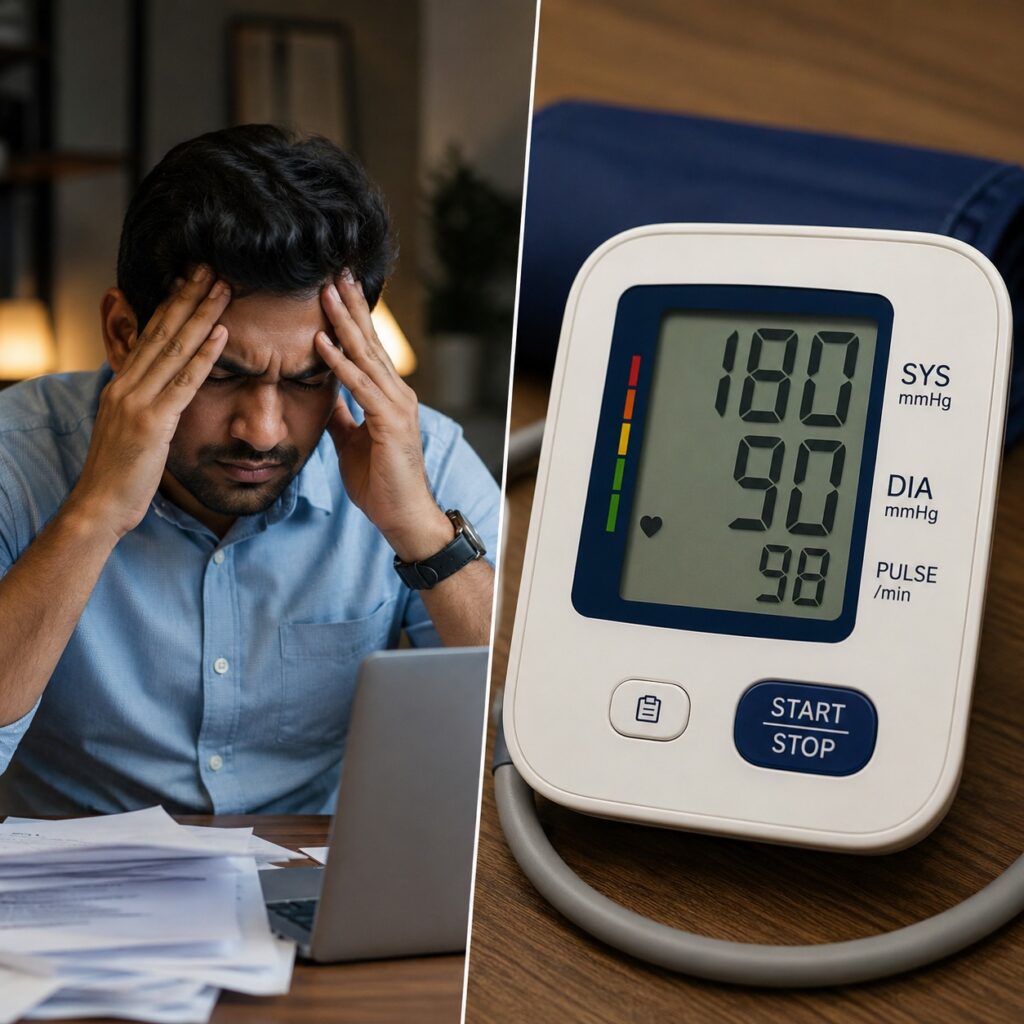
Your mind and your heart are closely connected. Stress, anxiety, worry, and persistent thoughts can activate the body’s stress response, causing the heart to beat faster and blood vessels to tighten. This can lead to a temporary rise in blood pressure. When stress becomes frequent or long-lasting, repeated changes in blood pressure may affect cardiovascular health. Everyday pressures—including work demands, financial concerns, family responsibilities, and lack of adequate rest—can contribute to ongoing stress.
Simple strategies such as regular physical activity, adequate sleep, slow and controlled breathing, relaxation practices, and taking breaks from stressful situations can help support healthier stress responses. However, stress should not automatically be assumed to be the only cause of high blood pressure. Regular BP monitoring and appropriate medical evaluation remain important, particularly when readings are consistently elevated.