The Most Simplified — and Misinterpreted — Blood Test
Few medical reports create as much confusion as a lipid profile. LDL. HDL. Triglycerides. Total cholesterol. Four numbers. Infinite anxiety. Someone sees LDL 130 and panics. Another sees HDL 70 and celebrates. A third avoids statins because “HDL is good.” A fourth is told triglycerides are high but “cholesterol is fine.” But cholesterol does not work in moral categories. It is not good versus bad. It is biology — and biology is nuanced. In cardiology, we do not interpret lipid reports in isolation. We interpret them in context. And that changes everything.
Cholesterol Is Not a Character — It’s a Carrier
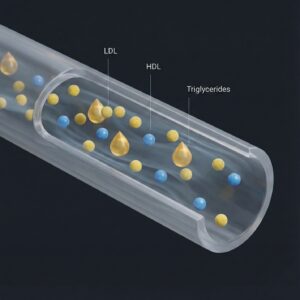
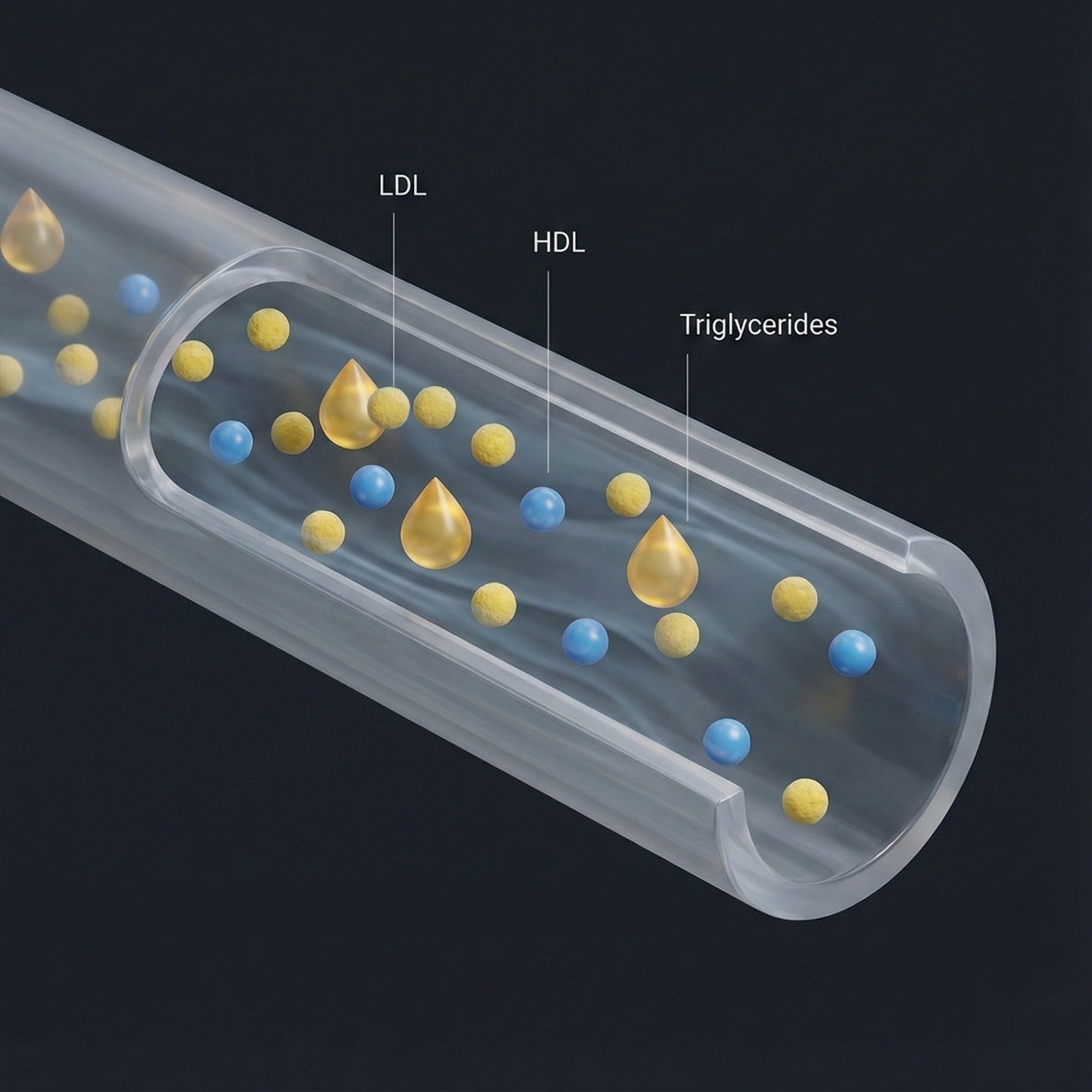
Cholesterol itself is not the villain. It is an essential structural molecule used to "build cell membranes, hormones, vitamin D, and bile acids. The real issue is not cholesterol’s existence —it is where it travels, how much of it circulates, and how long it stays there. LDL and HDL are not types of cholesterol. They are lipoproteins — carriers. Think of them as vehicles on a highway. LDL particles carry cholesterol from the liver to tissues. HDL particles help transport cholesterol back toward the liver. But here is what most oversimplified explanations miss: Heart disease risk is more closely linked to the number of atherogenic particles (primarily LDL particles and related ApoB particles) than to total cholesterol alone. And this is where nuance begins.
LDL: The Risk Marker That Actually Matters
LDL is often labeled “bad cholesterol.” That label is simplistic — but directionally correct. Why? Because LDL particles can enter the arterial wall. Once retained there, they can undergo oxidation and trigger inflammation. Over time, this contributes to plaque formation. Decades of research — genetic studies, epidemiology, and statin trials — consistently show: Lower cumulative exposure to LDL → lower lifetime cardiovascular risk. But again, context matters. An LDL of 130 mg/dL does not carry the same meaning in a 28-year-old athlete with no risk factors versus a 58-year-old diabetic with hypertension and family history of early heart disease. Same number. Different risk. In cardiology, LDL is interpreted relative to:• Age • Diabetes • Blood pressure • Smoking• Family history• Existing plaque (if any) • Coronary calcium score (in selected cases). This is why two people with the same LDL may receive very different advice.
HDL: Protective — But Not a Free Pass
HDL is called “good cholesterol.” Higher HDL levels are associated with lower risk in population studies. But raising HDL artificially with medications has not reduced heart attacks in clinical trials. This tells us something important: HDL may be a marker of metabolic health —but it is not a guaranteed shield. An HDL of 70 does not cancel out High LDL, Diabetes, Smoking or High triglycerides. Good HDL does not neutralize high risk. It contributes — but it does not override.
Cholesterol is not good or bad. Risk depends on context, exposure, and the arteries it travels through
Triglycerides: The Metabolic Clue
Triglycerides often reflect insulin resistance; excess refined carbs; visceral fat; poor sleep; or alcohol excess. Elevated triglycerides signal metabolic stress. When triglycerides are high and HDL is low, we often think about underlying insulin resistance. Triglycerides are not just a number. They are a metabolic fingerprint. In many Indian patients, this pattern is common —normal LDL, but high triglycerides and low HDL. That combination deserves attention.
What Cardiologists Actually Look At
When I review a lipid profile in clinic, I am not scanning for one “good” or “bad” number. I look at: LDL level, Non-HDL cholesterol, Triglycerides, HDL (as supportive information), Risk factors, Age, Clinical history and Evidence of existing disease. Modern lipid management is risk based — not number-chasing. Two patients with identical reports may receive Lifestyle advice only, Lifestyle + medication or Intensive LDL lowering. Because the decision is not about the number alone. It is about lifetime risk.
Cholesterol, Simplified:
- LDL is the primary driver of plaque risk
- HDL is helpful but not protective enough to ignore high LDL
- Triglycerides reflect metabolic health
- The same lipid number means different things in different people
- Statin decisions are risk-based, not fear based

How Do We Decide If You Need a Statin?
Doctors often use risk calculators and clinical categories to decide. You may benefit from statin therapy if:
✔ You have existing heart disease
✔ You have diabetes (age >40)
✔ LDL ≥190 mg/dL
✔ Your 10-year cardiovascular risk is elevated
✔ You have significant coronary calcium
Lifestyle modification is recommended for everyone. Medication depends on risk level. In selected intermediate-risk individuals, a CT Coronary Calcium Score may help clarify the need for statins. Not everyone needs medication. But some absolutely do.

Question: Doctor, my LDL is 145 but my HDL is 68. Do I still need a statin?
Answer: This is one of the most common and important questions I hear in clinic. An LDL of 145 mg/dL is mildly to moderately elevated. An HDL of 68 mg/dL is favorable. But these numbers do not cancel each other out.
HDL reflects metabolic health and is generally reassuring. However, it does not “neutralize” the biological effect of LDL particles circulating in your bloodstream. LDL exposure over time is what contributes to plaque formation.
So how do we decide? I look at five broader elements:
- Your age and lifetime exposure
- Diabetes or high blood pressure
- Smoking history
- Family history of early heart disease
- Evidence of plaque (if tested like CT calcium score, CT or invasive angiography)
- Existing heart disease like a previous heart attack, stroke, angioplasty or bypass surgery
In a young, otherwise healthy person with no additional risk factors, a focused lifestyle program and reassessment may be reasonable. However, in someone with diabetes, multiple risk factors, or known vascular disease, LDL 145 is generally above the recommended range — even if HDL is high. The key principle is simple: We treat overall cardiovascular risk — not LDL or HDL in isolation.
Non HDL Cholesterol and ApoB
Why This Matters
A standard lipid report often focuses on LDL. But LDL does not tell the full story — especially in patients with high triglycerides or metabolic risk. Non-HDL cholesterol and ApoB give a broader view of the particles that actually contribute to plaque formation.
What Is Non-HDL Cholesterol?
Non-HDL = Total Cholesterol − HDL. It includes all atherogenic particles, not just LDL.
Useful Non-HDL Targets
<130 mg/dL — Acceptable for most individuals
<100 mg/dL — For higher-risk patients
<85 mg/dL — For very high-risk individuals
A simple rule: Non-HDL target is usually ~30 mg/dL higher than LDL target
What Is ApoB?
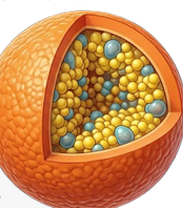
ApoB is a blood test that measures the number of atherogenic particles (LDL, VLDL, etc.) Think of it this way:
LDL = amount of cholesterol
ApoB = number of particles carrying it
More particles = higher chance of arterial entry → higher risk
Useful ApoB Targets
<90 mg/dL — Acceptable for most
<80 mg/dL — High-risk patients
<65–70 mg/dL — Very high-risk patients
When Is This Especially Helpful?
- High triglycerides
- Diabetes or insulin resistance
- Borderline LDL with uncertainty
- Strong family history despite “normal” LDL
Clinical Insight
In some patients, LDL looks acceptable — but ApoB or non-HDL reveals hidden risk.Takeaway
LDL is important — but not always sufficient. In selected patients, these markers refine risk and guide treatment more precisely.Editor’s Note

Dr. Amya Amonkar
Specialist

Download This Issue
“Understanding Your Lipid Profile: A Patient’s Interpretation Sheet” (Simple explanation of LDL, HDL, triglycerides, non-HDL)