



10 Indian Foods That Lower BP Naturally

Dr. Ameya Amonkar
Myth Busting

Key Takeaways

Potassium-rich foods help counter the effects of excess sodium and support healthy blood pressure.
Traditional Indian foods can be more beneficial than expensive "superfoods."
Small dietary changes made consistently often produce meaningful long-term improvements.
A colourful, fibre-rich Indian thali naturally supports heart health.
Reducing salt is just as important as increasing healthy foods.

Quick Summary
High blood pressure can often be improved through everyday dietary choices, especially when combined with other healthy lifestyle habits. Fortunately, many traditional Indian foods naturally support healthy blood pressure by providing potassium, magnesium, calcium, nitrates, fibre, and antioxidants while helping reduce excess sodium intake.

This guide explains how foods such as bananas, leafy greens, beetroot, tomatoes, dals, curd, fruits, nuts, seeds, garlic, and whole grains contribute to blood pressure control. It also demonstrates how to build a practical BP-friendly Indian thali that is realistic, affordable, and enjoyable. While nutrition is one of the most powerful tools for preventing and managing hypertension, it works best alongside regular exercise, stress management, adequate sleep, weight control, and prescribed medications when necessary.

Detailed Learning Guide

Everyday Indian Foods Can Help Lower Blood Pressure Naturally
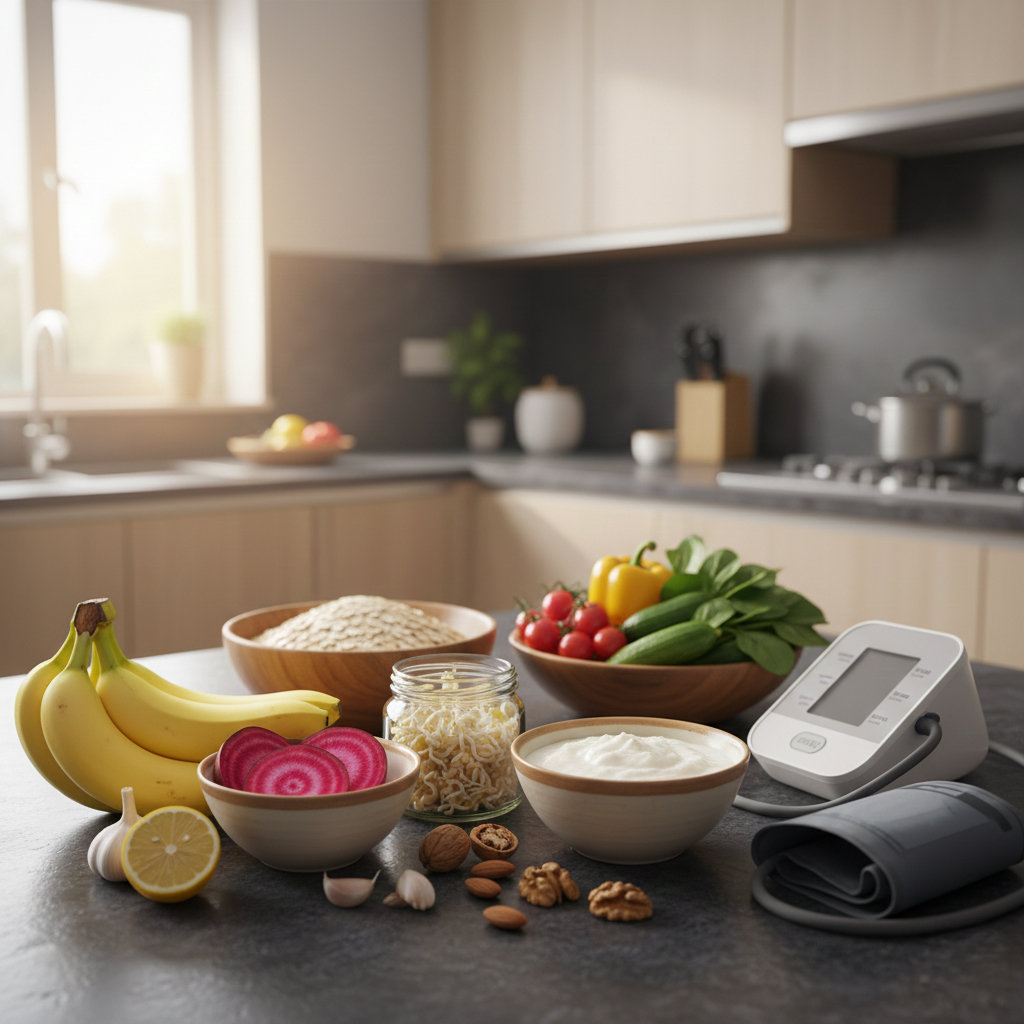
Many people believe lowering blood pressure requires expensive health foods or restrictive diets. In reality, many traditional Indian foods naturally contain nutrients that help maintain healthy blood pressure. Potassium helps balance sodium, magnesium supports healthy blood vessel function, calcium contributes to vascular health, while dietary fibre improves overall cardiovascular wellbeing. Foods rich in natural nitrates, such as leafy greens and beetroot, help the body produce nitric oxide, allowing blood vessels to relax and improving blood flow.

Rather than searching for a single “superfood,” the goal should be to include a variety of these nutrients throughout the day. Small improvements repeated consistently often produce greater benefits than dramatic short-term dietary changes.

Twelve Everyday Foods That Support Healthy Blood Pressure
Many common foods found in Indian kitchens have scientific evidence supporting their role in blood pressure management.

These include:

  • Bananas for potassium
  • Spinach, fenugreek, and mustard greens for potassium and nitrates
  • Beetroot for natural nitrates
  • Tomatoes for potassium and lycopene
  • Bottle gourd, pumpkin, and other water-rich vegetables
  • Lentils and pulses for fibre, potassium, and magnesium
  • Almonds, walnuts, flaxseeds, sunflower seeds, and pumpkin seeds for healthy fats and magnesium
  • Citrus fruits such as oranges and sweet lime
  • Unsweetened curd for calcium and probiotics
  • Garlic and onions for naturally occurring plant compounds
  • Dark chocolate (70% cocoa or higher) in moderation
  • Fresh coconut water for potassium, when appropriate

Each food contributes modestly, but together they create a dietary pattern that supports healthier blood pressure.

Building a Blood Pressure-Friendly Indian Thali
Healthy eating does not require giving up familiar Indian meals. A balanced thali naturally provides the nutrients needed for cardiovascular health when prepared thoughtfully.

A practical BP-friendly plate includes:

  • Whole-grain rotis made from jowar, bajra, or ragi instead of relying only on refined wheat
  • One serving of dal or legumes for plant protein and fibre
  • Plenty of colourful vegetables including leafy greens and seasonal produce
  • Fresh salad containing cucumber, tomato, carrot, and onion
  • A bowl of unsweetened curd
  • One serving of fresh fruit after meals

Instead of depending on salt for flavour, herbs, spices, garlic, ginger, cumin, lemon juice, coriander, and green chillies can make meals both enjoyable and heart healthy.

Small Dietary Changes Can Produce Meaningful Results
People often assume that only dramatic dietary changes improve blood pressure. Research suggests otherwise. Replacing processed snacks with fruit, increasing vegetables at lunch and dinner, switching to whole grains, and reducing packaged foods all contribute to better blood pressure over time.

The greatest improvements occur when healthy eating becomes part of daily life rather than a temporary diet. Consistency matters far more than perfection. Every meal provides another opportunity to support heart health.

Food Is the Foundation—Not the Entire Treatment
Nutrition is one of the strongest lifestyle tools available for preventing and managing hypertension. In individuals with mildly elevated blood pressure, reducing sodium while increasing potassium-rich foods may significantly improve readings and sometimes delay the need for medication.

However, dietary changes alone are not sufficient for everyone. People with very high blood pressure, diabetes, kidney disease, or established cardiovascular disease often require medications in addition to lifestyle modification. Taking prescribed medicines as advised while improving diet provides the greatest protection against stroke, heart attack, kidney disease, and heart failure.

Think of blood pressure control as a team effort where healthy eating, physical activity, sleep, stress management, weight control, and medication all work together.

Practical Tips for Long-Term Success
Successful blood pressure management does not depend on avoiding every favourite food. Instead, aim to build sustainable habits that fit your family and culture.

Helpful strategies include:

  • Fill half your plate with vegetables.
  • Eat fresh fruit every day.
  • Include dal or legumes regularly.
  • Limit packaged and highly processed foods.
  • Reduce added salt during cooking and at the table.
  • Snack on unsalted nuts instead of fried foods.
  • Drink water instead of sugary beverages.
  • Continue regular blood pressure monitoring and medical follow-up.

Over months and years, these habits can significantly reduce cardiovascular risk while improving overall health.

Frequently Asked Questions

Can eating one banana every day cure high blood pressure?
No. Bananas provide potassium, which supports healthy blood pressure, but no single food can cure hypertension. Blood pressure improves through an overall healthy eating pattern.

Is beetroot really effective for lowering blood pressure?
Beetroot contains dietary nitrates that help produce nitric oxide, which relaxes blood vessels. Some studies have shown modest short-term reductions in blood pressure.

Which Indian vegetables are best for blood pressure
Leafy greens, spinach, fenugreek, mustard greens, bottle gourd, pumpkin, tomatoes, carrots, and seasonal vegetables all support heart health when included regularly.

Can I eat curd if I have high blood pressure?
Yes. Unsweetened, low-fat curd provides calcium, potassium, and probiotics that support overall cardiovascular health.

Does garlic replace blood pressure medicines?
No. Garlic may have a mild blood pressure-lowering effect, but it should never replace prescribed medications.

Is coconut water good for hypertension?
For many healthy individuals, coconut water can be a good source of potassium. People with kidney disease or certain medical conditions should consult their doctor before consuming it regularly.

Can coffee increase blood pressure?
Coffee can temporarily raise blood pressure in some people. Moderate consumption is generally acceptable for most individuals unless advised otherwise by their healthcare provider.

Should I completely stop eating salt?
No. The goal is to reduce excess sodium intake rather than eliminate salt completely. Avoid processed foods and use herbs and spices to enhance flavour.

Medical Disclaimer
The information provided by HG Cardiowise is intended for educational purposes only and should not replace professional medical advice, diagnosis, or treatment. Dietary recommendations should always be individualised based on your medical history, medications, kidney function, diabetes status, allergies, and other health conditions. Never stop or change prescribed blood pressure medications without consulting your treating physician. If you have persistently elevated blood pressure or develop symptoms such as chest pain, severe headache, breathlessness, vision changes, or weakness, seek immediate medical attention.

Downloadable Resource

Blood Pressure Grocery & Snack Guide

8 Pages-PDF
Make healthier food choices with confidence. Download our practical grocery and snack guide featuring heart-friendly Indian foods, smart shopping tips, healthier swaps, and simple meal planning ideas for blood pressure management.

Who Should Watch This Video?

Adults with high blood pressure
People with a family history of hypertension
Patients looking to reduce salt intake naturally
Individuals interested in heart-healthy Indian nutrition

Related Videos

New videos every week!

Subscribe to get heart health tips and new videos straight to your inbox.

✉ Subscribe Now

New to Cardiowise?

Start your journey to a healthier heart with trusted videos, expert tips and practical guidance.

▷ Explore Now
Scroll to Top