Quick Summary
isits (white coat hypertension), or normal clinic readings despite high blood pressure at home (masked hypertension) can all lead to misleading results. Learning how to measure blood pressure correctly, monitoring readings over several days, and using tools such as home blood pressure monitoring or Ambulatory Blood Pressure Monitoring (ABPM) when appropriate provides a much more accurate picture. Understanding these patterns helps avoid unnecessary treatment while ensuring people with genuine hypertension receive timely care.
Detailed Learning Guide
Why Blood Pressure Is Never a Fixed Number
Many people assume that blood pressure should remain the same throughout the day. In reality, blood pressure is highly dynamic. It responds continuously to your body’s changing needs and external environment.
Several everyday factors can temporarily increase or decrease your blood pressure, including:
- Physical activity
- Emotional stress
- Poor sleep
- Caffeine intake
- A full bladder
- Cold weather
- Talking during measurement
- Pain or illness
For example, rushing into a clinic after climbing stairs may temporarily raise your blood pressure. After sitting quietly for five minutes, the reading often falls considerably. Neither reading is necessarily “wrong”—they simply reflect different physiological states.
This is why cardiologists rarely diagnose hypertension based on one measurement. Instead, they look for consistent trends across multiple readings taken under standardized conditions.
Five Common Reasons Your Blood Pressure Reading May Be Misleading
Even a high-quality blood pressure monitor can produce misleading results if it is not used correctly.
White Coat Hypertension:
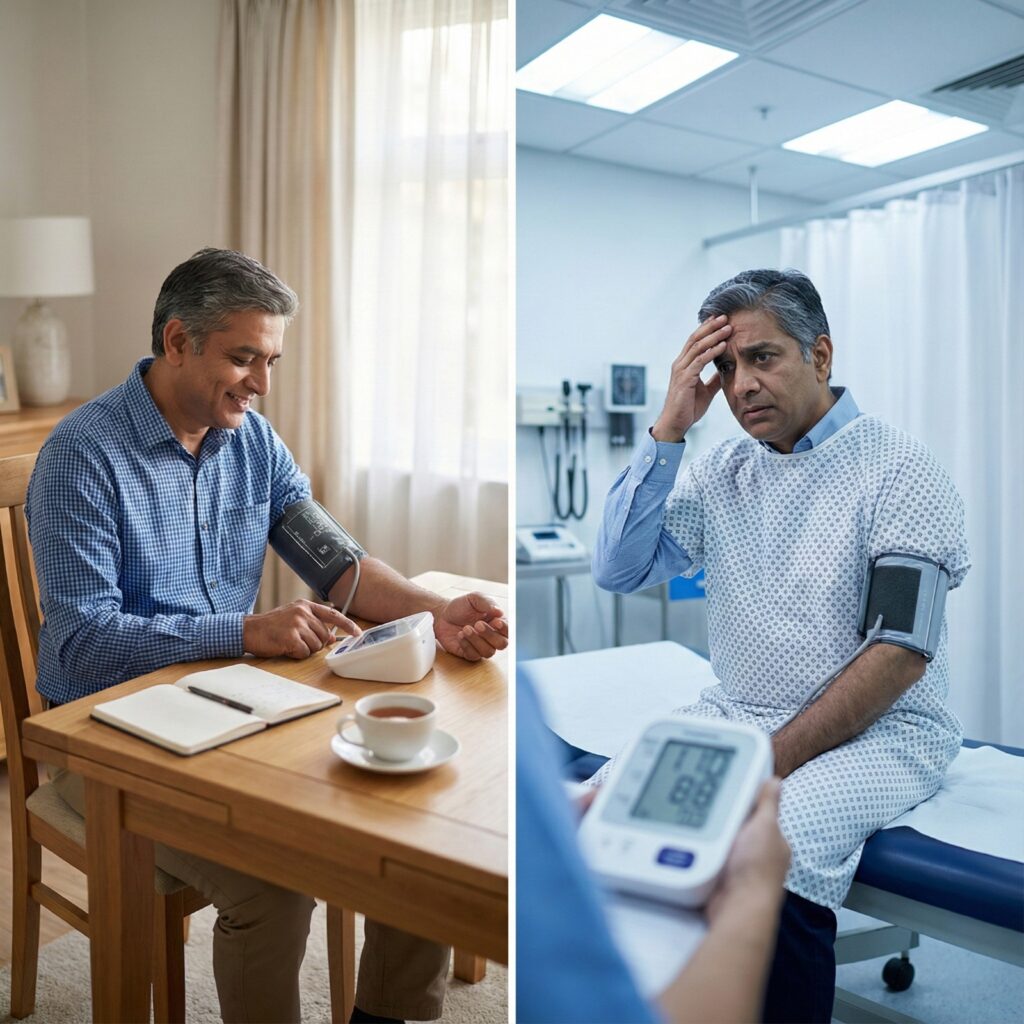
Some people experience elevated blood pressure only in medical settings because of anxiety or nervousness. Research suggests that approximately 15–30% of patients may experience white coat hypertension.
Without confirmation using home monitoring or ABPM, some individuals may be incorrectly diagnosed with hypertension.
Incorrect Cuff Size:
A cuff that is too small may overestimate blood pressure, while a cuff that is too large may underestimate it.
Selecting the appropriate cuff size based on upper arm circumference is essential for accurate measurements.
Poor Body Position:
Proper positioning is often overlooked.
For reliable readings:
- Sit comfortably with your back supported.
- Keep both feet flat on the floor.
- Avoid crossing your legs.
- Support your arm at heart level.
- Do not talk during the measurement.
Even small positioning errors can significantly alter the result.
Not Resting Before Measurement:
Blood pressure should always be measured after sitting quietly for at least five minutes.
Exercise, emotional stress, climbing stairs, smoking, tea, coffee, or recent meals can all temporarily increase blood pressure.
Depending on a Single Reading:
One isolated reading does not provide enough information to diagnose hypertension.
Instead, measure your blood pressure:
- Twice daily (morning and evening)
- Two readings each time, one minute apart
- Continue for at least five consecutive days
Your doctor can then use the average of these readings to make better treatment decisions.
Why Patterns Matter More Than Individual Numbers
Blood pressure behaves much like body weight—it naturally changes over time. Judging your cardiovascular health from a single measurement is similar to judging your weight after one large meal.
Doctors therefore focus on blood pressure patterns rather than isolated values.
For example:
A patient may record:
- Clinic BP: 145/90 mmHg
However, five days of properly measured home readings may average:
- Home BP: 126/78 mmHg
In such situations, medication may not be necessary. Instead, lifestyle modification and continued monitoring may be the appropriate approach.
Looking at trends helps reduce unnecessary treatment while identifying patients who genuinely require intervention.
Understanding White Coat Hypertension and Masked Hypertension
Not all blood pressure behaves in predictable ways.
White Coat Hypertension
This occurs when blood pressure is elevated in the doctor’s clinic but remains normal at home.
The temporary rise is usually related to anxiety associated with medical visits.
Without home monitoring, these patients may appear hypertensive despite having normal blood pressure during everyday life.
Masked Hypertension
The opposite situation can be even more concerning.
People with masked hypertension have:
- Normal clinic blood pressure
- Elevated blood pressure at home or during daily activities
Because clinic readings appear normal, the condition often goes undetected while silent damage continues to affect the heart, kidneys, brain, and blood vessels.
Masked hypertension is more common in:
- Younger adults
- Individuals with stressful occupations
- Smokers
- People with borderline clinic readings
- Those with sedentary lifestyles
- Individuals who experience early morning BP surges
When Ambulatory Blood Pressure Monitoring (ABPM) Is Recommended
Ambulatory Blood Pressure Monitoring (ABPM) is considered the most accurate method for confirming hypertension when routine readings are uncertain.
The patient wears a portable monitor for 24 hours while carrying out normal daily activities. The device automatically measures blood pressure every 15–30 minutes during the day and night.
ABPM provides valuable information that clinic readings cannot, including:
- Average daytime blood pressure
- Night-time blood pressure
- Early morning blood pressure surge
- Blood pressure variability
- Whether blood pressure “dips” normally during sleep
Failure of blood pressure to fall during sleep (known as a non-dipping pattern) is associated with increased cardiovascular risk.
Your doctor may recommend ABPM if:
- Clinic and home readings do not agree.
- White coat hypertension is suspected.
- Masked hypertension is suspected.
- Blood pressure remains difficult to control despite medication.
- There is concern about resistant hypertension.
How to Get the Most Accurate Blood Pressure Readings at Home
Following a consistent routine greatly improves the reliability of home blood pressure monitoring.
Before measuring:
- Rest quietly for at least five minutes.
- Avoid caffeine, smoking, and exercise for 30 minutes.
- Empty your bladder if needed.
During measurement:
- Sit upright with back supported.
- Keep feet flat on the floor.
- Place your arm at heart level.
- Use the correct cuff size.
- Remain silent throughout the measurement.
Record two readings one minute apart and maintain a log over several days. Sharing this record with your healthcare provider allows treatment decisions to be based on reliable long-term data rather than isolated readings.
Frequently Asked Questions
Why is my blood pressure higher at the doctor’s clinic than at home?
This may be due to white coat hypertension, where anxiety associated with medical visits temporarily raises blood pressure. Home monitoring or ABPM can help confirm whether your blood pressure is consistently elevated.
Is one high blood pressure reading enough to diagnose hypertension?
No. Hypertension is usually diagnosed using multiple readings taken on different days or with home blood pressure monitoring or ABPM.
How long should I rest before checking my blood pressure?
Sit quietly for at least five minutes before taking a reading. Avoid talking, moving around, or using your phone during this time.
Does cuff size really affect blood pressure readings?
Yes. An incorrectly sized cuff can significantly overestimate or underestimate your blood pressure.
What is masked hypertension?
Masked hypertension occurs when blood pressure appears normal in the clinic but is elevated during normal daily life or at home. It carries an increased risk of cardiovascular disease if left untreated.
What is ABPM?
Ambulatory Blood Pressure Monitoring (ABPM) is a portable device worn for 24 hours that records blood pressure throughout the day and night. It is considered the gold standard for confirming hypertension in selected patients.
How many home blood pressure readings should I take?
Most experts recommend measuring blood pressure twice daily, taking two readings one minute apart, for at least five consecutive days and averaging the results.
Medical Disclaimer
The information provided on this page is intended for educational purposes only and should not be considered a substitute for professional medical advice, diagnosis, or treatment. Blood pressure management should always be individualized based on your overall health, medical history, and risk factors. Never start, stop, or change prescribed medications without consulting your treating physician or qualified healthcare professional. If you experience symptoms such as severe chest pain, sudden weakness, difficulty speaking, severe headache, or breathlessness, seek immediate emergency medical care.